What Belongs in a Technology Event Agenda
Every successful tech event runs on a working schedule that aligns speakers, production teams, and audience expectations before the first slide appears on the LED wall.
Keynote sessions open the event by setting strategic vision. They're typically timed to AV cues, with transitions managed through event production software that syncs lighting and display changes automatically. Product demos follow a different logic entirely. Their job is proof, showing exactly how a piece of technology performs under real conditions, not just what it promises.
Executive panels offer leadership perspective, giving attendees context that demos alone can't provide. Startup showcases serve a separate function, spotlighting emerging companies that might otherwise get buried in a larger program. Networking blocks are deliberately unstructured, creating relationship time that registration software can now facilitate through AI-powered matchmaking.
Scheduled briefings, often overlooked, coordinate media and analyst updates with precision. Live analytics tools help organizers track session attendance in real time, so adjustments happen before problems do.
How Agendas Bring Structure to Product Launch Events
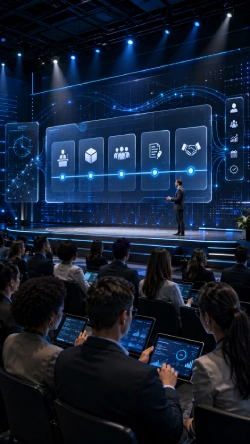
Audiences at product launches rarely arrive knowing exactly what to expect. A well-built agenda changes that immediately. By sequencing sessions from keynote to live demo, organizers give attendees a clear narrative arc – they understand what's coming, who's presenting it, and why it matters before a single slide appears.
Labeling sessions by product line or target audience reduces confusion, especially when a single event covers enterprise software, consumer hardware, and developer tools in the same afternoon. Attendees self-select what to attend, which cuts drop-off and keeps rooms appropriately filled.
Speaker identification matters more than most planners assume. Listing names, titles, and roles in the agenda sets credibility expectations before anyone takes the stage.
Scheduled press briefings and partner sessions, kept separate from general programming, let production teams manage transitions cleanly. AI-assisted display systems can pull the right content for each session automatically, reducing manual cue errors and keeping timing tight throughout a multi-hour event.
Why Clear Schedules Matter at Demo Days and Innovation Conferences
Mixing a live mobile launch with an investor Q&A in the same hour is a reliable way to frustrate everyone in the room. Demo days and innovation conferences bring together press, enterprise buyers, startup founders, and VCs, each with completely different goals. Without explicit scheduling, these groups collide.
Separate tracks solve this directly. A software preview session draws product managers; an investor briefing window pulls partners and analysts. Keeping those apart protects the messaging of both.
Buffer times matter more than most planners expect. A 15-minute gap between a media presentation and a sponsor showcase gives AV crews time to reset and gives attendees a moment to actually process what they saw.
Staffing decisions also sharpen when the agenda is tight. Room monitors, demo support technicians, and registration staff can be deployed precisely rather than spread thin across overlapping sessions. Sponsor visibility improves too, since branded spaces get consistent foot traffic when networking blocks are scheduled deliberately rather than left to chance.
A Clear Agenda Turns Innovation Into Action
Organizers who treat the agenda as a simple scheduling tool are missing what it actually does. A well-designed technology event agenda shapes how audiences absorb product launches, how speakers coordinate across sessions, and how media and investors experience the day's narrative. Without that structure, even the most impressive demo can land flat because no one knew it was coming or why it mattered. The agenda is the strategic experience map that tells every stakeholder – attendees, presenters, sponsors – exactly where to direct their attention and when. If your next product launch, demo day, or innovation conference feels scattered or rushed, the schedule itself is worth examining first.